
Skip to product information
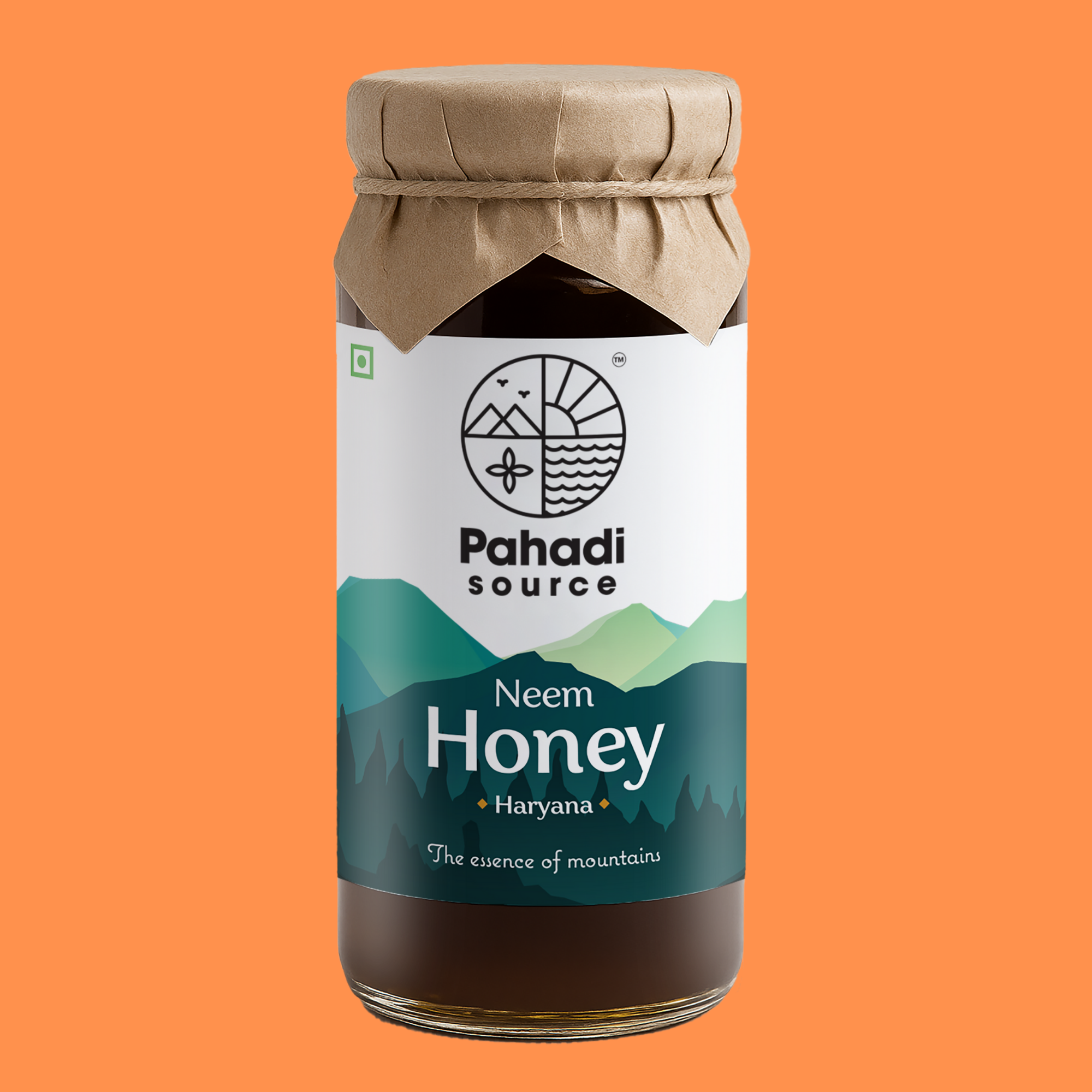


Neem Honey
Rs. 519.00
Taxes included.
Shipping calculated at checkout.
Why Pahadi Source Neem Honey?
Pahadi Source Neem Honey is harvested from beehives placed in the neem-flower belts of the Uttarakhand foothills, where wild neem trees (Azadirachta indica) bloom between March and May. Our beekeepers work with small apiaries across Haridwar, Rishikesh, and the Terai region — areas where neem grows abundantly alongside other medicinal flora. The result is a raw, unpasteurized, single-origin honey carrying the full bitter-medicinal signature of neem blossoms. No heating. No filtering beyond a fine mesh. No added glucose, jaggery, or "honey blends." Just honey the way Himalayan beekeepers have made it for generations.
Tasting Notes & Texture
Neem honey has a distinctive deep amber to dark brown color — noticeably darker than mustard or eucalyptus honey. The first taste is sweet, but a slightly bitter, pungent, herbal finish follows — the unmistakable signature of neem nectar. Aroma is earthy and faintly medicinal. In winter months (November to February), expect dense, semi-solid crystallization — a natural sign of raw, unprocessed honey with high glucose content. Warm the jar in a bowl of lukewarm water (never above 40°C) to soften it back to a pourable consistency.
Health Benefits of Raw Neem Honey
For diabetes & blood sugar
Neem honey has a lower glycemic index than refined sugar and is traditionally used in Ayurveda as a sweetener for people managing blood sugar. The neem nectar carries flavonoids and polyphenols that researchers have linked to improved insulin sensitivity. Diabetics should still consume in moderation (1 tsp) and consult a doctor.
For skin & immunity
Neem is celebrated in Ayurveda for its antibacterial and blood-purifying properties. Raw neem honey retains natural enzymes, antioxidants, and trace antimicrobial compounds that support skin clarity and immune function — especially helpful during seasonal changes when coughs and colds spike.
For digestion & detox
A teaspoon of neem honey with warm water on an empty stomach is a classic Ayurvedic nuskha for gut cleansing. The bitter principle of neem is believed to support liver function, ease bloating, and balance pitta dosha. Best taken first thing in the morning.
How to Use Neem Honey
Start your day with 1 tsp in a glass of warm (not hot) water with a squeeze of lemon — the classic Ayurvedic detox drink. Stir into green tea, tulsi tea, or kahwa once it cools below 40°C (heating destroys raw honey's enzymes). Drizzle over toast with desi cow ghee, or mix with curd. For skin: apply a thin layer as a 10-minute face mask, then rinse — neem honey's antibacterial profile suits acne-prone skin.
How It's Made — The Pahadi Source Way
Our beekeepers cold-extract honey using hand-cranked centrifuges — no heat, no pasteurization, ever. Temperature is monitored to stay below 40°C, preserving enzymes, pollen, and antioxidants that pasteurization destroys. The honey is filtered only through fine mesh to remove wax and bee debris, then bottled in food-grade glass jars at our Rishikesh facility. Every batch is tested for moisture and purity. From hive to jar in under 14 days.
Neem Honey vs Other Honey Varieties
| Variety | Flavor | Color | Best For | Price (300g) |
|---|---|---|---|---|
| Neem Honey | Sweet with bitter-herbal finish | Deep amber to dark brown | Diabetes, skin, immunity, detox | ₹519 |
| Wild Forest Honey | Bold, complex, multi-floral | Dark amber | Energy, daily wellness | ₹449 |
| Mustard Honey | Mild, buttery, light | Pale golden | Kids, daily tea, cooking | ₹399 |
| Eucalyptus Honey | Cool, slightly minty | Light amber | Cough, cold, sore throat | ₹399 |
Frequently Asked Questions
Is neem honey safe for diabetics?
Neem honey has a lower glycemic index than refined sugar, and Ayurveda has used it for centuries as a safer sweetener for people with blood sugar concerns. The flavonoids in neem nectar may support insulin sensitivity. That said, neem honey is still ~70% natural sugars, so diabetics should limit intake to 1 teaspoon per day and consult their doctor before adding it to a routine.
Why does neem honey taste slightly bitter?
The bitter-pungent aftertaste is the natural signature of neem nectar — and it's a quality marker, not a defect. Wild neem trees produce nectar rich in the same compounds that make neem leaves famously bitter. If your "neem honey" tastes purely sweet with no bitter note, it's likely been blended with cheaper honey or sugar syrup. Our raw neem honey carries an unmistakable herbal finish.
Why has my neem honey crystallized?
Crystallization is a hallmark of raw, unprocessed honey — not spoilage. Neem honey's natural glucose content causes it to solidify, especially in winter (below 20°C). To re-liquify, place the glass jar in a bowl of lukewarm water for 10-15 minutes. Never microwave or heat above 40°C — that destroys the enzymes and antioxidants that make raw honey valuable.
How is Pahadi Source neem honey different from supermarket brands?
Most supermarket honey — even those labeled "neem" — is pasteurized (heated to 70°C+), ultra-filtered to remove pollen, and often blended with rice or corn syrup to lower cost. Our honey is single-origin, cold-extracted below 40°C, never blended, and bottled within 14 days of harvest at our Rishikesh facility. You get the enzymes, pollen, and bitter neem note intact.
Can I give neem honey to children?
Yes, for children above 1 year of age, neem honey is safe and traditionally used in Ayurveda to support immunity and digestion. Start with 1/2 teaspoon mixed into warm water or milk. Never give any raw honey to infants under 12 months due to the risk of infant botulism — this applies to all honey varieties, not just neem.
What is the shelf life of raw neem honey?
Raw honey is one of the few foods that does not spoil — archaeologists have found edible honey in 3,000-year-old Egyptian tombs. Our neem honey carries a 24-month best-before date, but if stored in a cool, dry place with the lid tight, it stays good indefinitely. Crystallization over time is natural and reversible with gentle warming.